
I was browsing through a travel booking site. The site already had great filters that covered all the usual booking use cases. Yet, at the top, there was a text box where one could type natural language queries. AI. It felt like some product manager had been handed a mandate to “add generative AI” and this was the best they could come up with.
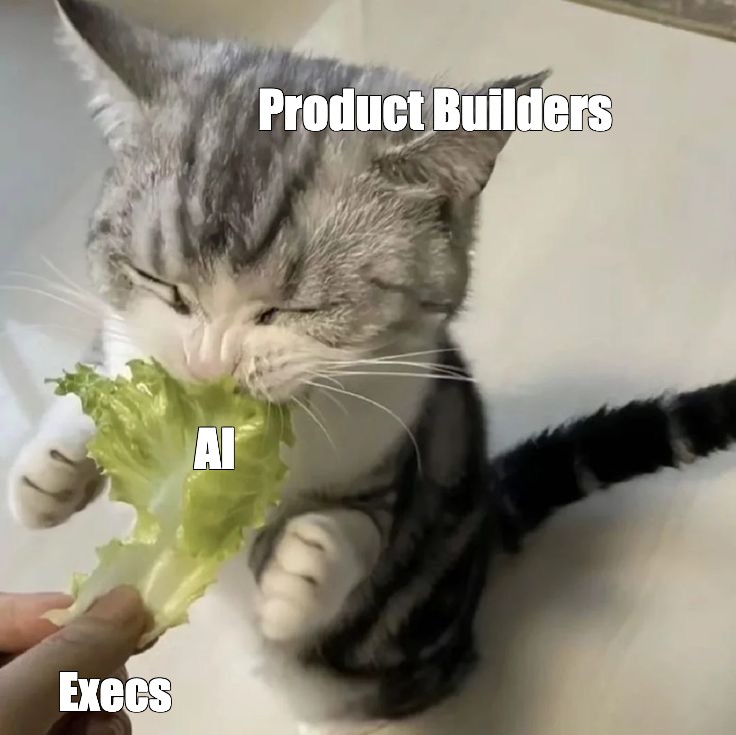
If you are a product builder, you can probably empathise with the above meme.
Keeping the snarky meme aside — why is this happening?
Missing the bus
Whenever something is hailed as a generational shift, businesses become terrified of missing the bus. Missing the bus is expensive and often fatal. Think back to the smartphone era — if you were a desktop‑first website and ignored mobile, you were toast as upstarts captured your users. AI is that kind of moment for companies today. No one wants to be the one who “did nothing” when the industry moved.
Communicating nuance
What execs really want is for teams to think deeply and identify where AI genuinely improves things. But that’s a nuanced message. And nuance doesn’t scale. The larger the organisation, the harder nuance is to communicate. Absolutes, on the other hand, scale beautifully. So instead of “Use AI where it actually helps,” the message becomes: “Mandate adding a generative AI feature” or “Do not start coding without prompts.” It’s easy to communicate, easy to measure — and so, that’s what sticks.
Repeat, repeat, repeat
Repetition is a core part of management — saying the same thing in multiple ways until it becomes muscle memory for the organisation. Especially if something is deemed crucial. AI is crucial right now because no one wants to miss the AI bus. Hence the repetition—in slides, town halls, emails, training, and awkward product features.
So now you know why there’s an AI cacophony in organisations.
 Abhirama's Blog